How to become Rust's top farmer by turning 126,000 cloth into 20,000,000 in a single wipe
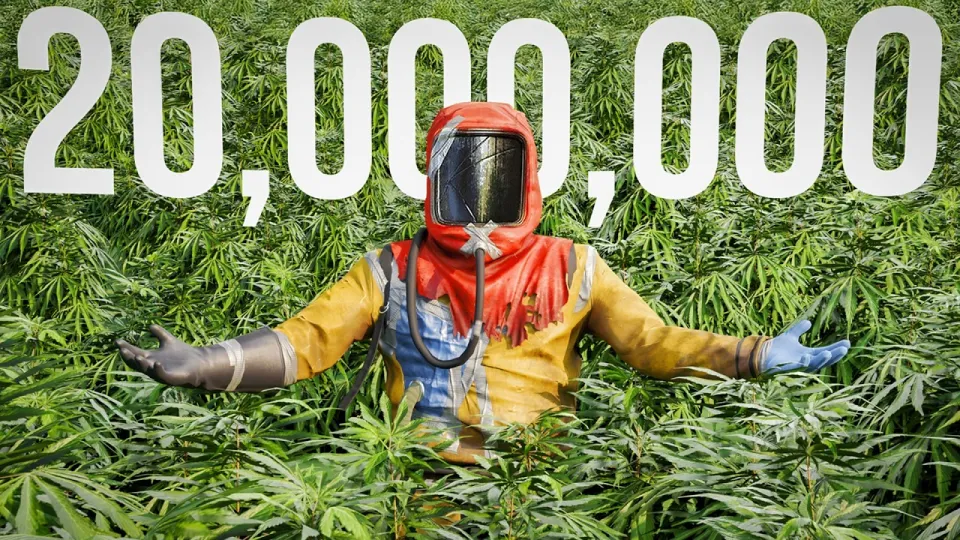
Video: I Became Rust's #1 Farmer...
You can order the same kind of articles for your own video to boost it on YouTube and Google. Just message the Telegram bot @sat_sit_bot. The bot writes and publishes the articles itself (with your YouTube video embedded) on popular topical websites (no ads). Your first 50 articles are free.
· based on the channel JTeles
Becoming Rust's top farmer means converting a small starting stock of cloth into millions within one wipe, and the most reliable route is a large, automated cloth farm defended around the clock. In the video breakdown by JTeles, the run starts with 126,000 cloth and targets 20,000,000 before the wipe ends, using a viewer-built farm, a dedicated clan and a lot of PvP to get there. Viewers who want to support the channel can grab the War Thunder bonus and free registration linked in the video.
What the 126,000 to 20,000,000 cloth challenge actually involves
The challenge is a single-wipe economy race: start with 126,000 cloth and reach 20,000,000 cloth in seven days without losing the farm to raids. Cloth is the raw material behind every important craft in Rust — bandages, medical syringes, clothing, sleeping bags and the hemp-based economy that feeds a clan's entire progression — so a farm of this scale is effectively a resource monopoly. Reaching 20 million means harvesting millions of hemp plants, which is only possible with a planted-and-harvested layout that runs continuously rather than a hand-picked patch behind a base.
The scale matters more than the method. A single 1,008-planter farm on a 5x server, planted and harvested one plant at a time before the plant-all and harvest-all updates, produced roughly 17.4 million cloth over two three-hour sessions. That number is a useful benchmark: it shows the target is realistic, but only if the farm is large, the uptime is near-total and nobody burns it down.
Step-by-step: how to build the biggest cloth farm in Rust
A record-scale cloth farm is built in stages, and each stage has to survive contact with the server before the next one begins.
- Secure the footprint first. Pick a location with room for a large, flat planter array and enough distance from spawn traffic to avoid constant scouting. Wall the perimeter before the planters go down.
- Scale the planter count aggressively. The goal is continuous planting and harvesting, so the array must be big enough that a full harvest cycle takes long enough for the next batch to be ready. Hundreds of planters is the entry point; over a thousand is where the big numbers come from.
- Automate the loop. Use the plant-all and harvest-all functions on every planter in range, and keep water and light consistent so growth does not stall. Manual planting is what turns a two-hour job into a six-hour one.
- Staff it in shifts. A farm this size needs people online at all hours. Recruiting viewers and clanmates to cover the night shift is what keeps production running while the owner sleeps.
- Stockpile, don't spend. Cloth only counts toward the target if it stays in storage. Convert surplus into nothing until the goal is hit, and keep the stock split across multiple containers so a single raid cannot wipe the total.
- Expect to defend it. The moment the farm becomes visible on the server, it becomes a target. Build turrets, keep a response team on call and treat every offline window as a risk.
Why a big farm makes enemies fast
A record-sized cloth farm is impossible to hide, and the moment a large clan identifies what is being built, the project turns into a siege. In this run a massive Russian clan found out about the attempt and did everything it could to stop the farm from being finished, which pushed the wipe into raids, base defense, shifting alliances and open PvP across the map.
The lesson for anyone attempting the same thing is that defense is part of farming, not a separate activity. A compound big enough to hold a record farm is also big enough to be worth raiding, and the value of the loot inside grows every hour the farm runs. Alliances with neighboring groups, shared scouting reports and a fast response to raid alarms matter as much as the planter layout.
The clan side: offline defense and teamwork
The farm only survived because clanmates held the compound while the owner was offline, defending the base and keeping production going through the night. That kind of coverage is the difference between a farm that reaches eight figures and one that gets flattened on day two.
Practical takeaways for a team attempting this:
- Assign explicit offline shifts so someone is always awake and watching the base.
- Keep the response kit — weapons, ammo, meds and building materials — in a dedicated defense box near the core, not scattered across the compound.
- Use the farm's own output to fund defense: cloth becomes bandages and clothing for the defenders at no extra cost.
- Rotate who farms and who guards, so the same players are not burning out on one job.
How big does the farm get before the server notices
At a certain size the farm stops being a base and becomes a landmark. In this run the compound grew so large and built-up that simply looking at it lagged the server — a sign that the planter array, lighting and structures had crossed well past what a normal base needs.
That has real consequences. Server lag near the base makes fights harder to win, slows harvesting and can even make the compound a target for players who just want to see it burn. Cable management and clean wiring across a farm that size also become a genuine build challenge, since every planter needs light and water without turning the base into a tangle of exposed connections.
Typical questions from viewers about record farms
Viewers watching a run like this usually ask the same things: how long it takes, whether the numbers are real and how a solo player could ever compete. The honest answer is that the target is not a solo project. A 20-million cloth goal needs a farm in the high hundreds to low thousands of planters, near-constant uptime and a team willing to defend it, which is why the run recruited viewers onto the server instead of grinding alone. The other common question is whether the farm is worth the risk — and the answer is that the cloth itself is only part of the value; the base, the alliances and the reputation built along the way are what make a wipe memorable.
All links from the video
- War Thunder free registration for PC and consoles: https://wtplay.link/jteles
- War Thunder mobile: https://wtm.game/jteles
- JTeles Discord: https://discord.gg/jteles
- Twitter/X: https://twitter.com/xJTeles
- TikTok: https://www.tiktok.com/@xjteles
Final thoughts on farming 20 million cloth in one wipe
Turning 126,000 cloth into 20,000,000 in a single wipe is a logistics problem dressed up as a farming problem: the planters are easy, the defense and staffing are not. The run shows that a record farm needs three things working at once — a planter array large enough to produce millions, a clan willing to hold the base through offline hours, and the flexibility to fight a war while the hemp keeps growing. JTeles documents the whole attempt, from the first 126,000 cloth to the server-lagging compound, in the video breakdown above. If you want to support the channel while planning your own run, use the War Thunder free sign-up link from the video.
Key takeaways
- The goal was to grow 126,000 starting cloth into 20,000,000 cloth within a single seven-day wipe.
- The plan relied on inviting viewers onto the server and building the biggest cloth farm in Rust.
- A large Russian clan discovered the project and tried to stop it, forcing PvP, raids and base defense.
- Clanmates defended the compound around the clock, including while the owner was offline.
- The finished farm was so large that looking at the compound visibly lagged the server.
Questions & answers
How much cloth do you need to become Rust's top farmer?
In this run the target was 20,000,000 cloth in a single wipe, starting from 126,000. For comparison, a 1,008-planter farm on a 5x server yielded about 17.4 million cloth across roughly six hours of manual planting and harvesting, so reaching 20 million on vanilla rates requires a much larger and continuously running farm.
Can one player build a 20 million cloth farm alone?
Practically no. A farm at that scale needs hundreds to over a thousand planters, constant planting and harvesting, and someone watching the base at all hours. The run relied on recruiting viewers and clanmates to farm in shifts and defend the compound while the owner was offline.
How do you protect a huge cloth farm from raids?
Build the perimeter before the planters, split stored cloth across multiple containers, keep a defense kit near the core and assign offline shifts so the base is never unwatched. Alliances with neighboring groups and fast responses to raid alarms matter as much as turrets, because a compound that large is a permanent target.
Why does a giant farm lag the Rust server?
A compound with hundreds or thousands of planters, plus lighting and wiring for each one, generates a huge amount of entity and physics load in one area. In this run the finished farm was large enough that simply looking at it caused visible server lag, which also makes fights around the base harder to win.
Source: I Became Rust's #1 Farmer... · Markdown version